Baby icon

Baby

5046604 Người theo dõi

New parent? Congrats! You need all the help you can get. So discuss anything and everything related to babies - confinement, feeding, burping, bathing, vaccinations, weaning, and share your experiences.
Hỏi & Đáp
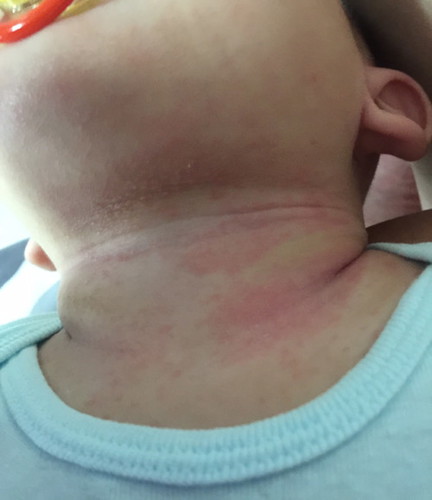
Slapped cheek syndrome is a mild to moderately contagious viral infection common among school children aged three to 15, occurring particularly in the winter and early spring. Slapped cheek syndrome is caused by parvovirus B19 and is spread by respiratory secretions from an infected person. By the time the rash appears, children are no longer infectious. The incubation period (the period between infection and signs or symptoms of illness) is usually four to 14 days, but can be as long as 21 days. Adults who work with young children such as childcare providers, teachers, and those in healthcare fields are most likely to be exposed. Here are the symptoms of slapped cheek syndrome in children: - High temperature (fever) of 38C (100.4F) - Bright red cheeks - A flat or raised red rash, usually on the arms and legs, which lasts from two to 39 days and may itch. The rash fades from the centre of red areas towards the edges, giving it a lacy appearance. The rash can recur after exercise, warm baths, rubbing the skin or emotional upset. - Less commonly, headache, sore throat and joint pain The following symptoms are more frequent and more severe in adults with parvovirus B19 infections, and they generally precede the rash, which often does not occur in adults, by seven to 10 days: - Headache - Sore throat - Muscle pain - Joint pain - Abdominal pain - Fever Most foetuses are unaffected when their mothers contract the virus, and it has not been proven to cause birth defects. However, if a foetus becomes infected, the virus can disrupt the foetus's ability to produce red blood cells, leading to a dangerous form of anaemia, heart failure, and sometimes miscarriage or stillbirth. Hope it helps!
Đọc thêm
 profile icon
Viết phản hồi

I'd like to get some advice and pointers (on weaning and introducing solids) from parents who have sent their babies to infant care. My daughter shall be turning 6mo in about a month's time. I would like to follow the 3 day rule when preparing purees for her. I would like some help in terms of the following: 1) How much food should I prepare so that I can bring to the ifc to complement the breastmilk which should still be her main intake? 2) Stupid question, but am I right that bm volume can increase even though she is taking solids? or should bm volume be adjusted lower since she has additional food source? 3) I read that solids should preferably not be fed in the evening as it is harder to digest. Does this mean that I would not get to feed my baby solids on weekdays since I am working full time and I get to see her only around 7pm or later? 4) I plan to prepare my own purees for her in advance. Polyclinic doc advised me to start with the not-so-nice-tasting veggies to expose her to such tastes first. What veggies are good for a start? Will be using the Philips steamer/blender. Do I wait for the blended puree to cool down first then freeze? if so, where and how should I keep the hot puree aside to cool down (avoid contamination and bacteria)? 5) If I intend to freeze in small quantity cubes, and then apportion/transfer required qty to bm storage bags (i have excess), should I take them directly out from the freezer only on the very morning itself or should I transfer down to the lower fridge compartment the night before? 6) Do I give bm and purees for a start or bm and cereals? Thank you in advance for your contribution and sharing in any possible way. Cheers!

Đọc thêm
 profile icon
Viết phản hồi
Xem thêm bài viết